

How Do You Know If You Have A Concussion?
How Do You Know If You Have A Concussion?

The dreaded “C-word” is thrown around in everyday life, most notably in sports. However, many can be left unsure if they have a concussion, or mild traumatic brain injury (mTBI). Often, there are often no physical signs during a concussion. The most important thing to understand about a concussion is that it is a brain injury and, as a consequence, must be caused by direct or indirect impact on the brain. Brain injury caused by factors other than impact, such as an infection or blood supply to brain, are not concussions.
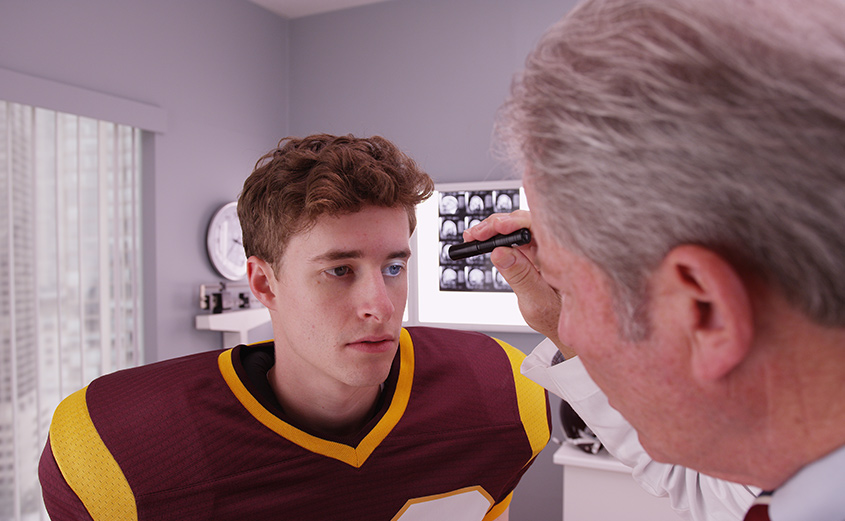
Well, then how do you know if you have a concussion? All concussions involve a traumatic impact to the head accompanied by either loss of consciousness (LOC), alteration of consciousness,post traumatic amnesia or focal neurological signs. These are telltale signs that you should be concerned about the prospect of a concussion. However, an important rule of thumb is to seriously consider the possibility of a concussion anytime impact to the head is involved. As stated previously, a concussion is caused by physical injury to the brain. Note that impact can caused by collision between the brain and the skull, which is possible during periods of rapid acceleration changes (such as car accidents). When evaluating for signs of concussion, keep in mind that not all concussions are the same. Therefore, a two people with concussions may experience completely different symptoms. Moreover, the length, onset, and severity of symptoms is rarely, if ever, the same. Since some of the symptoms of a concussion can present weeks after the initial impact, it is important to continue to monitor symptoms beyond the immediate aftermath of an injury.
Often, children and adults will complain about “not feeling themselves.” The following are additional common symptoms of a concussion:
*Persistent headaches
*Difficulty or slowness in remembering, concentrating, making decisions, thinking, speaking, acting, or reading
*Confusion
*Low energy
*Fluctuations in mood
*Disrupted sleep patterns
*Light-headedness, dizziness, or loss of balance
*Nausea
*Sensitivity to lights, sounds, or distractions
*Compromised vision, smell, or taste
*Ringing in the ears
If you or loved one are suspicious of having a concussion, make an appointment for professional evaluation right away. This will help avoid further damage. For employees and athletes, professional guidance is crucial to “return to the field.”
The Pathways team of professionals has helped thousands of people with brain injuries. We are Dedicated to effective and compassionate care for individuals with neurological challenges.
The post How Do You Know If You Have A Concussion? appeared first on Pathways Neuropsychology Associates.
Source: Pathways Neuropsychology
How Do You Know If You Have A Concussion?







 March is




 A new study suggests there’s some science behind the claims made for mindfulness meditation. The benefits of mindfulness meditation, increasingly popular in recent years, are supposed to be many: reduced stress and risk for various diseases, improved well-being, a rewired brain. But the experimental bases to support these claims have been few. Supporters of the practice have relied on very small samples of unrepresentative subjects, like isolated Buddhist monks who spend hours meditating every day, or on studies that generally were not randomized and did not include placebo control groups.